Transform Your Book Design: The Power of a Hardcover Mockup
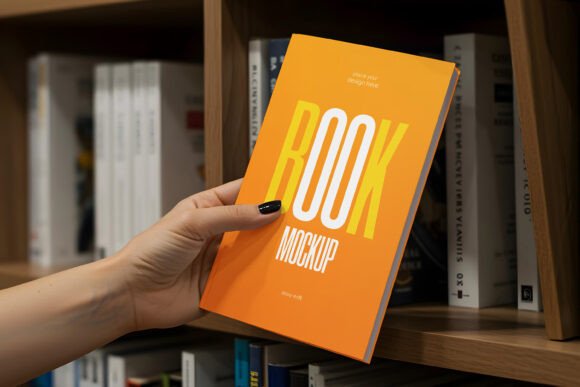
Imagine you've poured months—maybe years—into writing a book. You've edited, revised, and finally reached the point where it's ready to meet the world. But there's one crucial step left: the cover. In a sea of titles on a bookstore shelf or a digital storefront, your cover is the silent salesperson, the first handshake with a potential reader. A compelling design can be the difference between being picked up or passed over. This is where a high-quality Hardcover Book Mockup becomes an indispensable tool, moving your concept from a flat digital file to a tangible, three-dimensional object that tells a story at a glance.
More Than a Pretty Picture: Why Context is King
Creating a stunning cover design is one thing; presenting it effectively is another challenge entirely. A design viewed in isolation on a screen lacks context. How do the colors interact with natural light? How does the texture of the paper look against a backdrop? Does the typography hold its weight when viewed from a distance? This is the gap a professional mockup bridges. By placing your design onto a photorealistic rendering of a hardcover book, you instantly ground it in reality. You're no longer just showing a layout; you're showing a product. This shift in perspective is critical for making informed design decisions and for convincing stakeholders—whether they are clients, partners, or your future audience—of your vision's viability.
Consider the practical applications. For a brand identity project, seeing the book cover in a library setting helps assess if the visual language aligns with the brand's desired aesthetic—be it academic, whimsical, or avant-garde. For packaging design, it allows you to test how the spine and back cover work together with the front. For social media graphics and marketing assets, a 3D mockup creates far more engaging and shareable content than a simple 2D image. It transforms your promotional materials from informational to aspirational.
From Concept to Convincing Presentation
The true power of a versatile mockup lies in its ability to facilitate experimentation. It becomes a dynamic testing ground for every element of your design. You can swiftly evaluate different color schemes to see which one pops most authentically. Test multiple font pairings to ensure your title and author name are not only stylish but also legible at a small thumbnail size. Adjust the composition, tweak the logo placement, and see how light and shadow play across the cover's surface. This iterative process, fueled by a high-resolution template, is what separates good design from great, market-ready design.
This level of visualization is particularly valuable for small business owners and entrepreneurs developing digital products or print materials. It provides a cost-effective way to create professional presentation materials without the need for a physical photo shoot. A well-crafted mockup allows you to showcase your upcoming publication on a website, in a blog post, or across editorial layouts with a level of polish that builds instant credibility. It’s a key asset for anyone serious about their visual communication.
Practical Integration into Your Design Workflow
Integrating a hardcover book mockup into your workflow is straightforward and yields significant rewards. The process typically involves a few key steps: uploading your cover artwork, adjusting the background or environment, and fine-tuning the lighting and shadows to match the scene. The goal is to create a harmonious image where the book looks like it belongs there, inviting the viewer to imagine holding it.
Here’s how you can leverage it across various projects:
- For Authors & Publishers: Use the mockup to generate compelling visuals for your book launch campaign, author website, and press kits. It adds a professional sheen that can attract reviewers and early readers.
- For Designers & Agencies: Incorporate it into client presentations to provide a clear, tangible vision of the final product. This reduces ambiguity and helps secure approvals faster. It’s also perfect for building a robust design assets library.
- For Marketers & Content Creators: Create eye-catching graphics for email newsletters, social media posts, and online ads. A 3D book graphic naturally draws more attention than a flat image, boosting engagement.
- For Hobbyists & Crafters: Design beautiful visuals for personal projects, family histories, or custom recipe books. Seeing your work as a "real" book is incredibly rewarding and motivational.
Remember, the most effective mockups are those that feel authentic. Pay attention to the details—the way the light hits the cover, the subtle shadow under the book, the texture of the environment. These nuances contribute to the overall believability of the scene, which in turn makes your design look more professional and trustworthy. It’s a practical application of modern typography and design principles in a real-world context.
Elevating Your Visual Narrative
Ultimately, a hardcover book mockup is a storytelling tool. It allows you to frame your design within a narrative before a single copy is printed. Does it belong on a scholar's desk, a cozy coffee table, or a minimalist studio shelf? The environment you choose tells a subtle story about the book's content and its intended audience. This contextual storytelling is a powerful form of visual communication that can significantly enhance audience engagement.
Whether you're finalizing a logo design for an imprint, crafting packaging for a special edition, or creating merchandise, seeing your work on a physical object changes the game. It moves your project from the realm of ideas into the space of possibility. By using a high-quality, AI-generated mockup with ample resolution, you give yourself the creative freedom to experiment, refine, and present your work with the confidence it deserves. It’s not just about making a cover look good; it’s about making it look real, desirable, and ready for its reader.